Categories
Uncategorized

When Everything’s Pulled Out of Line

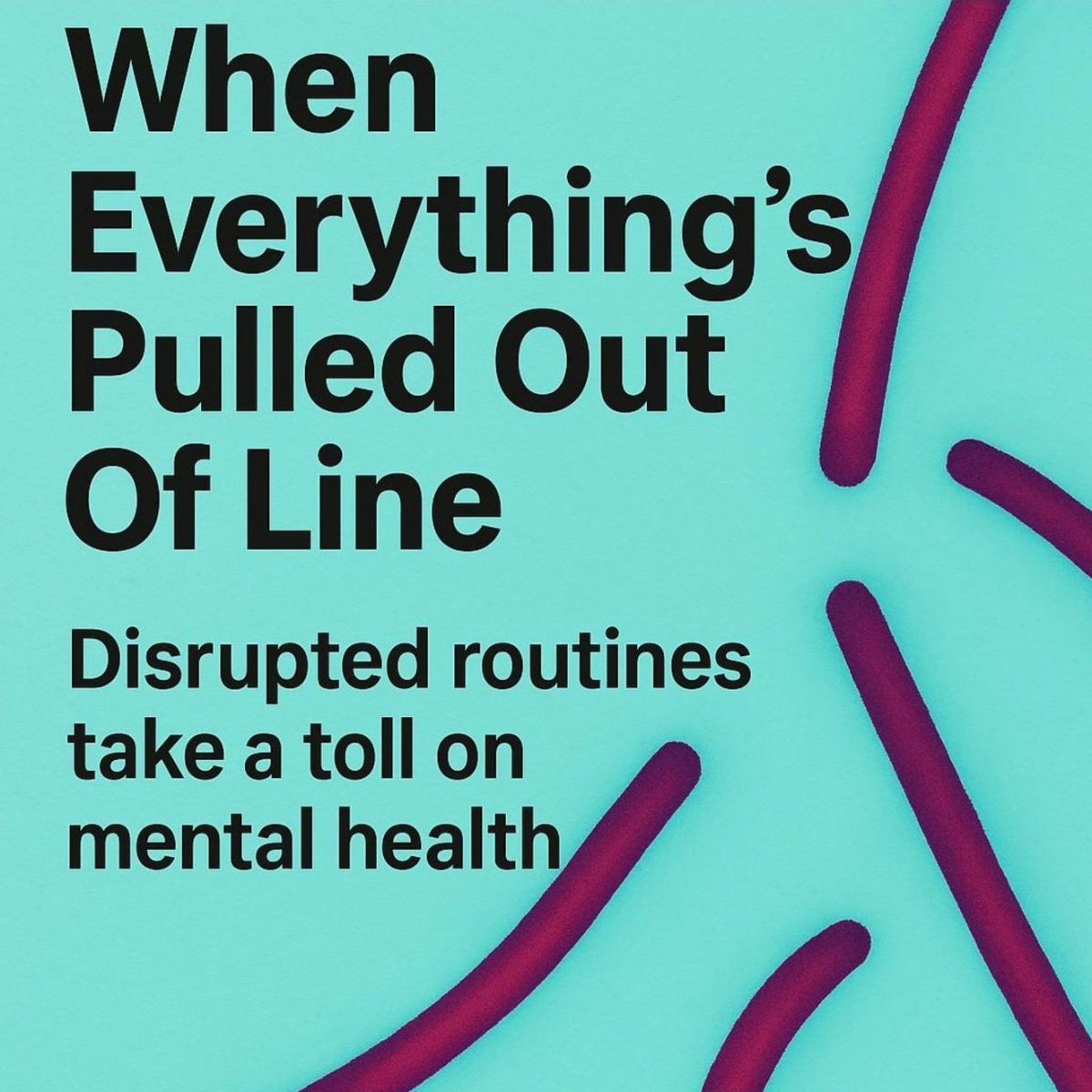
Image: “The Break in the Line” (2025), created by Jenny McClymont. Used with permission. All rights reserved.

We don’t always snap. Sometimes, we start bending.

One line at a time, work, sleep, focus, peace, drawn further apart from each other until we don’t quite recognise the shape of our days. Nothing’s gone dramatically wrong, but nothing feels quite right either. We wake up inside what looks like an ordinary routine and wonder, ‘Where did I go?

In my practice and my life, I keep meeting people who say:

I’m functioning, but I’m not fine.

I feel like I’m slowly disappearing.

I’m tired of being tired.

They are not burnt out in the loud, dramatic way we used to picture. They are quietly, constantly stretched—trying to hold together work, emotions, finances, purpose, and identity while pretending to be OK. And this pressure is now everywhere, understated but relentless.

A Mental Health Crisis Hidden in Plain Sight

  • Over 85% of UK employees experience symptoms of burnout.
  • More than 50% feel they can’t safely talk about mental health at work.
  • Young adults report the highest anxiety levels ever recorded, often linked to instability, job insecurity, and social isolation.

And yet we’re told to “keep going,” “stay productive,” and “stay positive.” When you’re quietly breaking, these instructions feel like denial.

This is what inspired the image above: lines that should flow but instead are pulled and twisted, still connected but no longer whole.

Pause. What if you didn’t need to hold it all?

Sometimes, healing isn’t about fixing what’s broken. It’s about acknowledging what hurts.

It’s the moment you let yourself say:

This is too much.

I need rest.

I miss who I was before I got this tired.

Therapy doesn’t begin with answers. It starts with presence, someone beside you who sees you as you are, not as you’re trying to be.

Gentle Reminders for Those Feeling the Strain

  1. You are not your output
  2. Productivity is not proof of your worth. Your rest matters as much as your results.
  3. It’s OK to name the quiet crisis
  4. You don’t need to collapse to justify help. If you’re struggling, that’s enough.
  5. Healing isn’t always dramatic
  6. Sometimes, it’s a sigh, a pause, a long breath. That’s where recovery starts.
  7. Let someone witness you
  8. Not fix. Just witness. Being seen is often the first step to being well.
  9. You haven’t failed
  10. You’ve adapted. You’ve coped. And now you’re allowed to want something gentler.

 Final Reflection

If your inner lines feel out of place, misaligned, broken, stretched, you are not alone. You are not broken. You are responding to a world that is often out of sync with what human beings need.

So, pause.

Soften.

Step back into your rhythm, however slowly.

Let the lines blur and reform on their terms.

Because you were never meant to be a machine.


Reference Sources

Reed. (2024, June 10). 85% of workforce feel burnt out and exhausted. The Times. Retrieved from https://www.thetimes.co.uk/article/85-percent-workforce-burnout-mental-health-reed-pvcqwt3l3

CIPD. (2023, October 12). Almost half of UK employees uncomfortable discussing mental health at work. People Management. Retrieved from https://www.peoplemanagement.co.uk/article/1743062/half-uk-employees-uncomfortable-discussing-mental-health-at-work


 

Categories
Uncategorized

Let’s Talk About Compassion

Let’s look at the words:

Compassion.

Com – pass – I – on.

A whisper in a loud world.

A call to presence, to self-love, to connection.

“Com” – with.

“Pass” – movement.

“I” – the self.

“On” – forward.

Compassion moves with you.

It doesn’t demand perfection.

It asks you to show up—to honour who you are,

where you’ve come from,

and who you are still becoming.

Don’t worry about living someone else’s life.

That’s not compassion.

That’s forgetting yourself.

Compassion is not about denial.

It’s about remembering

Remembering your value.

Showing gratitude to the self

that wakes up each day and keeps going.

Imagine the whole world

pausing, just for one second,

to offer someone—even a stranger—compassion.

What would shift?

What could heal?

At times, we lose our way.

And instead of stopping to reflect,

we blame, we deflect, we rush.

But that isn’t compassion.

Compassion is a soft place to land.

It is the moment you realise

it’s okay to be human.

To nurture. To care.

To love gently.

To offer yourself the same tenderness

you long to give others.

So, pause.

Breathe.

Ask yourself today—not tomorrow, not yesterday—

How can I have compassion for myself today?

It’s not selfish.

It’s sacred.

Categories
Uncategorized

Compassion: The Quiet Power We’ve Forgotten

In our fast-moving, achievement-driven world, compassion is often overlooked. We rush through days filled with to-do lists and expectations, rarely pausing to ask: How am I treating myself? How am I treating others? In the busyness of life, we may begin to lose sight of the quiet, essential power that compassion holds—not just in therapy rooms or crisis moments, but in everyday life.

Compassion isn’t about grand gestures. It starts with simple things: how we speak to ourselves after a mistake, how we respond to a friend who’s struggling, how we choose to listen, soften, or make space for someone else. And yet, many of us find it easier to extend kindness to others than to ourselves. We are our own harshest critics—quick to judge, slow to forgive.

But self-compassion is not self-indulgence. It’s a foundation. When we offer kindness inward, we build the emotional strength to show up more gently and patiently in the world around us. It becomes easier to hold boundaries without guilt, to speak with more understanding, and to meet others with presence rather than pressure.

In today’s culture—where comparison, perfectionism, and individualism often take centre stage—practising compassion is a quiet return to what matters. It reminds us that behind every face is a story, behind every silence, a reason, and behind every outburst, a need.

We don’t have to wait for significant events or deep suffering to practice compassion. It can be in how we treat ourselves when we’re tired, how we pause before reacting, how we notice someone’s tone and choose empathy instead of assumption.

Let’s start there: to care. Not perfectly, not dramatically—just consciously, gently, and more often. Compassion isn’t weakness; it’s strength with heart.

Categories
Uncategorized

Wings Without Wings – Just a Moment to Be

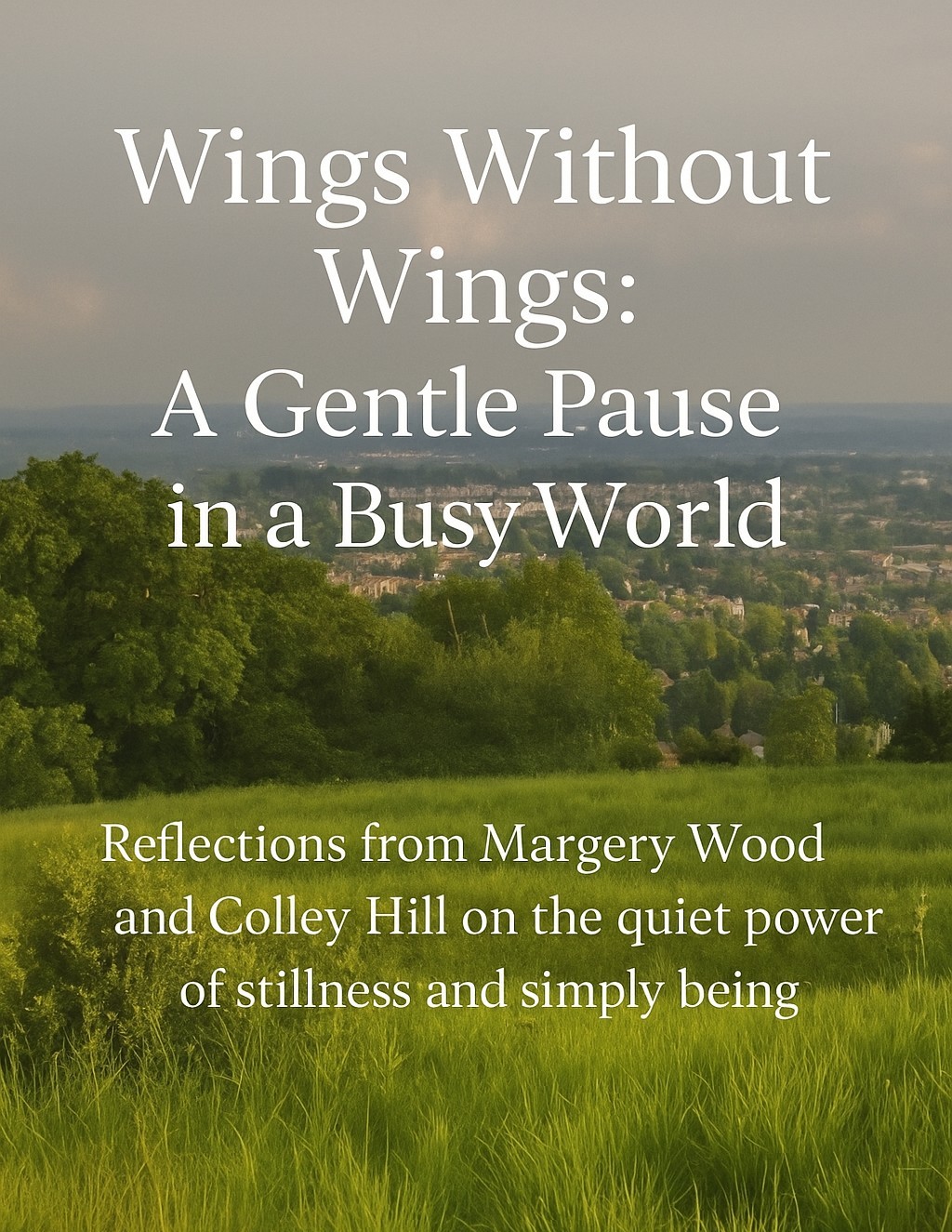
Wings Without Wings

Reflections from Margery Wood and Colley Hill on the quiet power of stillness and simply being.

Have You Ever Just Stopped to ‘Be’?

In a world full of doing, achieving, rushing, and scrolling…

Have you ever stopped… just for a moment… to be?

Not to fix.

Not to solve.

Not to plan.

Just to breathe.

To notice.

To exist.

Take a moment—one minute, two, three or five—to be still.

What comes to mind when everything else pauses?

For some, this is a mindful practice. For others, it’s a chance to reconnect with their breath, their body, or something deeper.

It doesn’t need a name. It doesn’t have to look a certain way. It’s yours.

Spiritual journeys hold different meanings for different people.

Whether it’s through silence, movement, creativity, or connection with nature—this is your space to explore.

When we make time to pause, we remember we’re not machines.

We’re not here to keep going until burnout or breakdown.

We’re allowed to stop. To notice. To feel.

And in those moments, we often find clarity, grounding, and even unexpected joy.

Wings Without Wings

This weekend, I walked through Margery Wood and climbed Colley Hill.

The sun was high.

The sky, open and blue.

The view… breath-taking.

And in that stillness, I remembered something:

We can all fly—without wings.

Through presence.

Through beauty.

Through being.

And by letting go of what weighs us down.

A Short Poem from the Hilltop

The breeze was gentle, the path was wide,

A chorus of birdsong on every side.

The trees stood tall, and the sun kissed my face,

And suddenly—I felt held by this place.

No wings, no rush, no need to strive,

Just the quiet joy of being alive.

Let this be your reminder today:

You don’t need to do more to be enough.

Sometimes, all it takes is a breath… and the choice to pause.

Closing Note

Sometimes, stillness says more than words ever could.

If this resonated with you, be still—and perhaps revisit it when you next need to find stillness.

Categories
Uncategorized

What If You Permit Yourself to Grow?

“Growth mindset” isn’t just a phrase for motivational posters or business seminars—it’s a quiet, decisive shift in how we relate to ourselves and the world around us. It’s not about being perfect or endlessly striving. It’s about believing that you can learn, change, and evolve—and that mistakes, challenges, and setbacks are part of the process.

When we adopt a growth mindset, something subtle but transformative happens. We stop viewing struggles as signs of failure and start seeing them as stepping stones. Life becomes less about proving ourselves and more about discovering what we’re capable of. This shift can give everyday moments more depth and meaning.

You might notice:

  • Disappointments don’t define you. They guide you.
  • Learning becomes energising rather than exhausting.
  • The feedback feels helpful rather than threatening.
  • Stop comparing yourself to others and start exploring your potential.

Most importantly, embracing growth means allowing yourself to make mistakes, to be a beginner, to try again, and to move forward even when things feel uncertain.

Whether you’re navigating relationships, work, parenting, or personal change, a growth mindset invites you to live more fully and compassionately with yourself. It says: you’re allowed to grow—and life becomes more meaningful because of it.

Reflection Question (for readers):

What’s one area of your life where you’ve been holding back because you were afraid of getting it wrong—and what might shift if you approached it with a growth mindset?

Categories
Uncategorized

This Quiet Ache You Carry — A Story That Might Be Yours

There is an ache that lives quietly within people. It doesn’t shout. It doesn’t always cry. It sits at the edge of things — in the middle of a conversation, during a smile, behind a moment of silence.

Some people carry it so gracefully that they never know it was there.

You might look at them and think:

“They’ve got it all together.”

“They’re always creating, doing, thriving.”


But wholeness isn’t always loud.

And being okay doesn’t always mean being well.


The Things We Carry That No One Sees

 We all have weight that isn’t visible.

The constant effort of keeping things going. The loneliness tucked into the folds of a busy life. The questions that keep coming back no matter how many times we answer them.

It’s easy to feel like you’re the only one.

You’re not.

This isn’t just a blog. This is a pause—a companion.

An invitation to breathe — maybe for the first time today.


Loneliness, Described Differently

 Not all loneliness appears to be being alone.

Sometimes, it feels like this: A beautiful instrument left untouched — still full of music, just waiting for someone to sit down and listen — Jenny McClymont

This is the kind of loneliness that longs not just for company but for connection. To be seen clearly. To be heard without having to shout.

If you’ve ever felt like that instrument, this is for you.


Hunger That Isn’t for Food

There’s a craving we don’t always name —

Not for food, or sleep, or space.

But for meaning. Resonance. A reminder that we’re not the only ones.

It’s the hunger to see yourself in someone else’s words and think:

Yes. That’s it.

That’s how it feels.

This is my story, too.


If you’re hungry for something real, soft, and genuine —

You’ve come to the right place.


Let’s walk it together.

No fixes. No pressure.

It’s just a return to something quieter and more whole.

Categories
Uncategorized

The Weight We Carry That No One Sees

Some people seem to glow. They appear calm, accomplished, and creative. Others look at them and say things like:


“I want to be like you.”

“You’re always doing something amazing.”

“It just seems to come so naturally to you.”


But the surface rarely tells the whole story.


Behind closed doors, there may be self-doubt, fatigue, and the relentless pressure to keep going — to be steady, kind, productive, inspiring — even on days when it’s hard to get out of bed.


There’s the unseen effort of holding things together.

Of creating something out of nothing.

Of offering care and guidance while no one asks how you’re doing.


Sometimes, it feels like everyone wants a piece of the light, but no one sees the cost of keeping it burning.


And still — somehow — people carry on.


Not because they feel invincible, but because somewhere deep inside, they still believe in the quiet power of showing up. Of doing the work. Of reaching out with something gentle or generous, even when they’re tired.


There is quiet strength in simply continuing.

There is grace in not being perfect.

And there is hope in knowing you are not alone in your silent battles.


 Reflective Prompt: “What No One Sees”

Take a few quiet moments and write a short letter to yourself.

Begin with:

“Here’s what I wish someone knew about me right now…”

Let the words come without judgment. What are you carrying that others don’t see? What would it feel like to be fully seen — not just for what you do, but for who you are?


Categories
Uncategorized

Describe Loneliness in Terms of Something Else.


Like a beautiful instrument left untouched — still full of music, just waiting for someone to sit down and listen Jenny McClymont

Loneliness is one of those feelings many of us carry, yet it is rarely named. It doesn’t always show up how we expect — and sometimes, it hides in plain sight. This reflection explores how loneliness appears in everyday life and what it might quietly ask of us.

Loneliness does not necessarily present quiet.

At work, it might look like a bright smile, asking how your day’s going, and laughing at the right moments — all while feeling completely alone inside.
It can still be invisible, although occupying a whole room. You cancel plans, even though deep down you hope someone will persuade you to come anyway.
I’m walking home with headphones in, trying to ease the silence rather than appreciate the music. Loneliness can appear in the empty inbox, the phone that flashes but never rings, and the surface-level talks.
It shows up in the sigh you let out as you close the door behind you and in the pain of being misinterpreted — even by people who love you.
It does not necessarily look depressing. There is activity occasionally. Helping others is the way you avoid having to sit with yourself. It occasionally lurks under “I’m fine.”

But when we face loneliness — really face it — it can open the door to something else. Sometimes, just naming it helps. It makes space for a quiet kind of hope: the chance to reconnect, to be met, or to come back to the parts of ourselves we’ve pushed aside. It might not fix everything, but it softens the edges.

What does loneliness look like for you, and what might it be quietly asking for?

Categories
Uncategorized

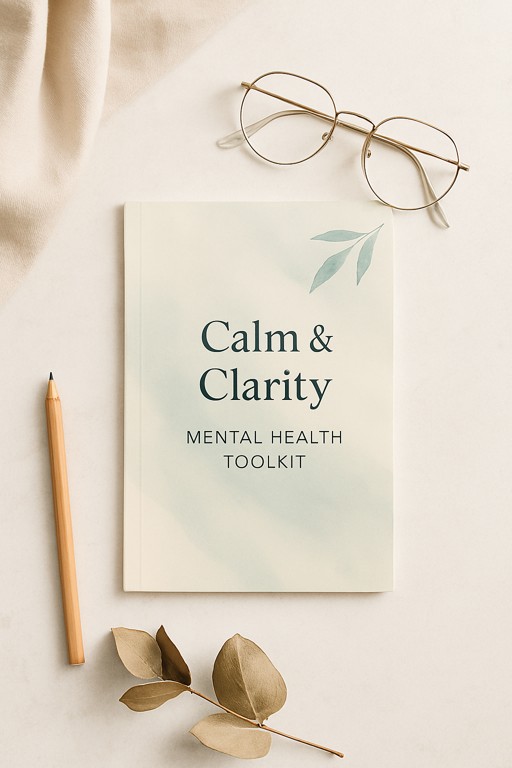
FREE Calm & Clarity Mental Health Toolkit

We all need space to pause sometimes.

This free toolkit is a reflective, creative, and therapeutic resource designed to support anyone feeling overwhelmed, anxious, or needing a quieter moment. Whether you’re a therapist, student, or someone exploring your emotional well-being, Calm & Clarity offers gentle guidance to reconnect with yourself.

Inside, you’ll find:

  • Grounding journaling prompts
  • Soothing creative practices
  • Emotional check-ins
  • Encouraging visual quotes
  • And affirmations to carry with you

Created by Jenny McClymont of Reflect On Academy, this is more than a workbook—it’s a small sanctuary in digital form.

Free Tool Kit:Calm Clarity Complete Toolkit

Categories
Uncategorized

Rediscovering Calm: An Approach to Understanding and Managing Anxiety

Anxiety has become an increasingly common struggle in today’s fast-paced world. Whether it’s related to work, relationships, or the weight of daily life, many of us are faced with feelings of unease, worry, and tension. Understanding anxiety and finding effective ways to manage it is essential for maintaining both our mental and physical well-being.

In this post, we will explore an approach to anxiety that focuses not just on managing symptoms, but on rediscovering calm, cultivating mindfulness, and building resilience. Let’s start with a few key concepts to understand anxiety and how we can begin taking back control.

What is Anxiety?

At its core, anxiety is a natural emotional response to perceived stress or danger. It’s the feeling we get when faced with uncertainty or fear. It’s our body’s way of preparing us for action — the “fight or flight” response. In small doses, anxiety can be helpful, motivating us to stay alert and focused. However, when anxiety becomes chronic or overwhelming, it can interfere with our daily lives.

Understanding the Root Causes

While anxiety is often triggered by external factors — like work pressure or relationship challenges — it can also be influenced by deeper internal factors, such as past experiences, unresolved trauma, or negative thinking patterns. To truly manage anxiety, it’s important to understand these root causes and address them with compassion and care.

An Approach: Cultivating Calm through Mindfulness

A key shift in managing anxiety is to move away from simply “getting rid of” it and instead focus on embracing it with mindfulness. Mindfulness encourages us to stay present, observe our emotions without judgment, and breathe through moments of discomfort. By developing mindfulness skills, we can reduce anxiety’s power over us and reconnect with a sense of calm.

Practical Strategies for Managing Anxiety

  1. Deep Breathing: When anxiety strikes, your body goes into a heightened state of arousal. By practising deep breathing, you can activate your parasympathetic nervous system — the body’s natural “calming” mechanism. Try inhaling deeply for four counts, holding for four counts, and exhaling for four counts. Repeat this cycle several times to ground yourself.
  2. Progressive Muscle Relaxation (PMR): PMR involves tensing and relaxing each muscle group in your body, helping to release physical tension caused by anxiety. This technique helps you become more aware of how anxiety manifests physically and gives you tools to release it.
  3. Mindful Meditation: Meditation offers a time to centre yourself and tune out the mind’s constant chatter. Even five minutes of mindful breathing and body scanning can help quiet the mind and reduce anxiety.
  4. Self-Compassion: Being kind to yourself during anxious moments is crucial. Anxiety often brings self-criticism along with it. Instead of judging yourself, practice self-compassion by treating yourself with the kindness you would offer a close friend.

Creating an Anxiety Management Plan

While these techniques can offer immediate relief, developing a personal anxiety management plan is key to long-term success. Here’s a simple worksheet to help you track your anxiety and develop an action plan that works for you:

Final Thoughts: Rediscovering Calm

Managing anxiety is a process, and it’s different for everyone. By focusing on mindfulness, self-compassion, and creating a structured plan, you can find the calm that lives within you — even amid chaos. Remember, it’s not about eliminating anxiety but instead learning to navigate it with grace and resilience.

If you’re feeling overwhelmed, don’t hesitate to seek professional support. Counselling and therapy can offer invaluable tools and insight into your anxiety, helping you live a more balanced and peaceful life.

Take the first step today—download our anxiety management worksheet and begin your journey to rediscovering calm.

Anxiety_Management_Worksheet

Additional Support for Your Journey

We understand that anxiety can be overwhelming at times, but you don’t have to face it alone. We’re here to support you in every step of your journey toward calm and resilience. As part of our commitment to your well-being, we’ve created a helpful Anxiety Rating with Stars tool to guide you through understanding your feelings and exploring actionable steps to regain balance. Remember, every small step counts, and you have the power to create positive change.

Anxiety Rating with Stars