
Reflect On Academy
COUNSELLING AND PSYCHOTHERAPY TRAINING IN PURLEY, CROYDON, EASY REACH OF SUTTON, WALLINGTON, CATERHAM, SOUTH EAST LONDON AND SURREY
Advanced Diploma in Psychotherapy (Top-Up) Level 7
Advanced Diploma in Psychotherapy (Top-up) Level 7
Designed to meet the requirements of the BACP Progression Qualification Scheme (SCoPEd Framework Column C)
Programme Overview
The Advanced Diploma in Psychotherapy is an advanced, post-qualification, postgraduate-level training for qualified counsellors who want to deepen their clinical practice. It offers a progression route from established practitioner training at Level 5 or above, including the ROA BACP-accredited Level 5 Diploma in Psychotherapeutic Counselling (mapped to SCoPEd Column B), and is designed to meet SCoPEd Column C competencies.
For full details, please request the Level 7 Advanced Diploma fact sheet.
Theoretical Philosophy Rationale
The course is rooted in a pluralistic and integrative philosophy, drawing on person-centred, psychodynamic, cognitive-behavioural, relational, developmental, and trauma-informed perspectives. It invites practitioners into a postgraduate ethos of critical reflection, ethical influence, and professional leadership, emphasising flexibility, cultural sensitivity, and an ethically grounded therapeutic orientation.
Aims
The programme is designed to help experienced counsellors work ethically and confidently with more complex and diverse client presentations, deepen their theoretical integration, and research awareness, and grow into reflective practitioners who can contribute through supervision, teaching, and leadership. It includes a substantial independent project that brings together research, theory, and clinical practice, and is aligned with BACP’s SCoPEd Column C competencies to support progression toward senior practitioner status.
Learning Outcomes
On successful completion, graduates will be able to demonstrate ethical, reflexive clinical practice with complex and diverse client presentations; integrate theory and research literacy to deliver culturally sensitive, evidence-informed work; strengthen their professional identity and leadership across supervision, teaching, and collaborative practice; and complete a substantial independent project that brings together research, theory, and clinical insight.
Course Structure
Our course provides advanced, practice-focused training that integrates theory, research, and clinical application with clear aims, learning outcomes, and ongoing evaluation. It includes 120 hours of direct teaching, supplemented by independent study, supervised clinical practice, reflective work, and engagement with current psychotherapy literature. Teaching combines experiential learning, skills development, and reflective discussion to strengthen your clinical confidence and deepen your relational and reflexive capacities.
Duration: The programme is delivered over one academic year on a part-time basis (starting in September), with a blend of in-person and synchronous online learning in line with BACP requirements. Teaching consists of:
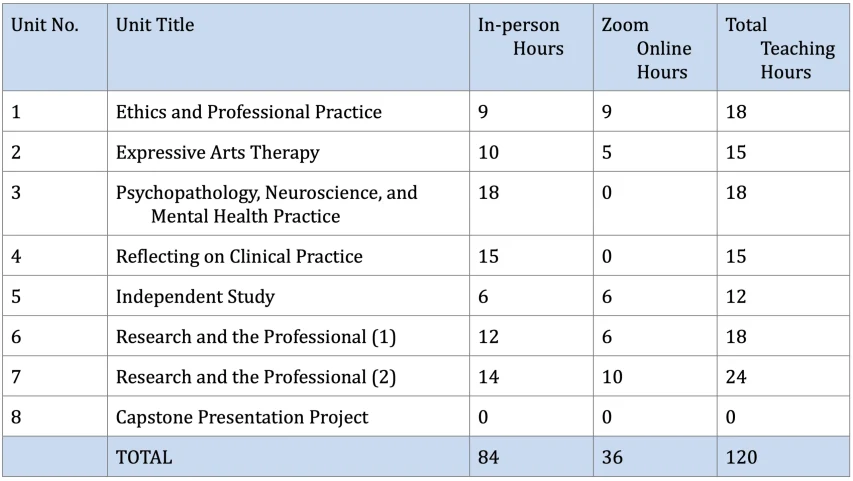
- 84 hours of in-person learning, delivered across two Saturdays per month: one session from 9am-1pm (4 hours) and one session from 9am-12pm (3 hours) - Purley.
- 36 hours of live online learning (one structured Monday evening per month, 6pm–9pm, via Zoom)
Only live, tutor-led contact hours are counted toward the required 120 hours.
Clinical Practice
Students also complete a minimum of 50 supervised clinical practice hours during the training year, undertaken in an approved placement or existing private practice (subject to programme approval) and supported by appropriate supervision.
All clinical work is undertaken in accordance with the BACP Ethical Framework and SCoPEd Column C expectations.
Supervision Requirements
Supervision must be provided by a suitably qualified supervisor and includes a minimum of 1.5 hours’ supervision per month (pro rata to caseload).
All client work must be formally approved by the course team and is monitored as an integral part of the training.
Expectations Outside of Teaching Time
Students are expected to have an appropriate learning environment with reliable technology and a private space for online learning and remote client work. Independent study, clinical placement work, supervision, and directed reading form essential parts of the programme and contribute to the development of advanced reflective and clinical competence.
Integrated Supervised Clinical Practice (Placement)
In addition to the supervised clinical practice outlined above, a minimum of 50 hours of supervised client work is completed during the Level 7 year and evidenced through supervision records, client logs, and the Clinical Portfolio, undertaken either in an approved placement or existing private practice, provided it meets programme requirements and is overseen by an appropriately qualified supervisor. Supervision is consistent with the BACP Ethical Framework and SCoPEd Column C expectations, including a minimum of 1.5 hours’ supervision per month (pro rata to caseload) with a supervisor experienced in working with more complex presentations.
All client work must be formally approved by the course team and is monitored and assessed as an integral part of the Level 7 award.
Teaching and Assessment
Teaching is delivered through a blended model of theoretical seminars, experiential workshops, skills practice, and small-group reflective discussion. The programme provides 120 hours of direct teaching, with approximately 84 (70%) hours face-to-face (two Saturdays per month) and 36 (30%) hours of synchronous live online teaching via Zoom (one Monday evening per month). In line with BACP requirements, only live contact hours are counted toward the 120 hours.
In-person days support relational depth, experiential learning, group process, and tutors’ ability to make fitness-to-practise assessments. Live online sessions are tutor-led, interactive, and structured, and students are expected to have a private learning space with a working webcam, microphone, and reliable internet connection. Learning is grounded in real clinical work with clients, supported through supervision, and supplemented by directed reading, independent study, supervised client work, and engagement with current psychotherapy literature.
Assessment is coursework-based and includes written assignments, case formulations, presentations, observed skills assessments (OSCEs), research tasks, and a final Capstone Project with viva. Clinical work is assessed through case studies, supervision-informed reflections, and the Clinical Portfolio, which evidences your supervised client hours and developing competence with more complex presentations. Together, these assessments are designed to evidence SCoPEd Column C competencies, demonstrating your readiness to practise as an advanced, ethically grounded psychotherapist.
Course Units and Content
- Ethics & Professional Practice – Advanced ethical reasoning, governance, risk assessment, EDI, and professional communication for complex clinical work.
- Expressive Arts Therapy – Creative and symbolic methods to deepen self-reflection, relational attunement, and therapeutic sensitivity.
- Psychopathology, Neuroscience & Mental Health Practice – In-depth study of mental health presentations, diagnostic frameworks, neurobiology, formulation, and risk.
- Reflecting on Clinical Practice – Structured reflection, supervision themes, rupture–repair, and development of a Clinical Portfolio.
- Independent Study – Critical engagement with psychotherapy literature, linking research, ethics, and EDI to practice.
- Research & the Professional (1) – Research design, ethics, and development of an ethically sound, practice-relevant research proposal.
- Research & the Professional (2) – Synthesis and communication of research through a professional poster and oral presentation.
- Capstone Presentation Project – A substantial independent project and viva integrating theory, research, and supervised clinical practice at SCoPEd Column C level.
The course blends lectures, workshops, group work, supervision, reflective practice, and both directed and self-directed learning.
Unit Table and Breakdown of Teaching Hours by Individual Unit
Fees & Payment
The course fee is £2,600 for the year, with a £500 non-refundable deposit payable in advance. Flexible payment by instalment is available via monthly standing order or direct debit, and a 10% discount is offered for payment in full.
Location of In-Person Teaching
In-person teaching takes place in Purley, South East London, at Hebron Hall, Christ Church, 859–887 Brighton Road, Purley, CR8 2BN.
Entry Requirements
Applicants must meet one of the following entry requirements:
Hold a Level 6 (or higher) counselling/psychotherapy qualification (validated by a recognised awarding body and including supervised skills practice and placement/client hours in line with professional training standards), or
Have completed the ROA Level 5 Diploma in Psychotherapeutic Counselling (BACP-accredited, three years, mapped to SCoPEd Column B) and have successfully completed an approved Level 6 bridging route (ROA or equivalent).
Note: Applicants who have completed a three-year Level 5 clinical counselling training may be eligible via an approved Level 6 bridging pathway (e.g., the ROA Bridging Pathway or equivalent).
Assessment & Academic Integrity
Reflect On Academy has clear assessment and academic integrity procedures. Assessment decisions are documented and subject to internal quality assurance and, where required, external review.
Any concerns about malpractice, plagiarism or maladministration are managed under the Reflect On Academy Malpractice, Plagiarism and Maladministration Policy.
Appeals
Reflect On Academy has policies and procedures to address thoroughly, fairly, and expeditiously any problems that might arise in your assessment, such as grounds for appeals against assessment results and the process you must follow if you wish to appeal, which must comply with the regulations.
Quality Assurance
Reflect On Academy follows robust quality assurance processes informed by external review and sector standards. An independent body oversees our quality and standards through enhancement-led organisational reviews, and we follow a formal Quality Code for training providers. Assessment decisions are documented, internally moderated, and, where required, externally reviewed to ensure consistency, fairness, and academic integrity. Feedback from students, supervisors, and tutors is used to monitor and continually improve the programme.
Equality and Diversity
ROA is committed to equality of opportunity and promotes an inclusive culture, values diversity, and exposes students to social, relational, and cross-cultural contexts. It seeks to train counsellors who can approach clients with integrity, acceptance, respect, and sensitivity.
Health and Safety
The College is committed to promoting positive attitudes to health, safety, and wellbeing, and will comply with the Health and Safety at Work Act 1974 and other health and safety related legislation.
Concerns and Complaints Procedure
Our concerns and complaints procedure helps you resolve issues concerning any aspect of your course in a clear, equitable, and timely manner – and similarly addresses matters relating to students.
Online and Phone Therapy (OPT)
The course ensures the implementation of robust and compliant data protection policies and procedures for online and phone therapy (OPT), in line with UK GDPR, confidentiality standards and safe digital practice. The OPT framework covers secure communication, safe storage and transfer of client information, boundaries around digital contact, and risk management when working remotely with clients.
Your Voice Shapes Our Academy
We actively welcome student feedback and see it as central to the development of the course. You are encouraged to share your experiences through informal discussions, structured feedback activities, and end-of-module or end-of-year reviews. Student perspectives help us identify what is working well and where improvements could be made, and we aim to foster a collaborative learning community where your voice genuinely shapes the training.
Accreditation of Prior Learning (APL)
Due to the intensive and postgraduate nature of the Level 7 Advanced Diploma in Psychotherapy (Top-Up), Accreditation of Prior Learning (APL) is not available once the course has commenced. This ensures the integrity of the training pathway and alignment with the BACP SCoPEd Framework (Column C) competencies.
If you have any questions regarding APL procedures or eligibility, please contact the Admin Team via email: info@reflectonacademy.co.uk
How to Apply
Please request an application form by contacting the Reflect-On Academy administrator: info@reflectonacademy.co.uk.